

Cryptocurrency mining is a way to earn digital coins by using your computer to solve complex puzzles. It supports blockchain networks like Bitcoin and Litecoin. This guide explains how to start mining in 2025, covering equipment, methods, costs, and more. Written for beginners, it uses simple language and provides actionable steps to help you begin.
What is Crypto Mining?
Crypto mining uses computers to verify transactions on a blockchain. Miners solve mathematical puzzles to add new blocks to the blockchain. In return, they earn cryptocurrency rewards and transaction fees.
- Why mine? Mining secures the blockchain and prevents fraud. It also creates new coins, letting you earn crypto without buying it.
- Why it matters: Miners keep networks like Bitcoin running smoothly and securely.
For more on how crypto works, check out Crypto Wallets Explained on Krypdrops.com.
How Does Mining Work?
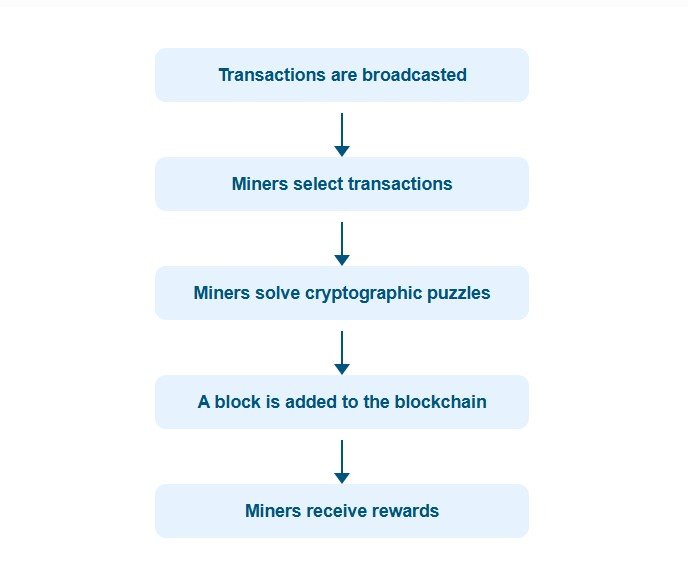
Mining uses a system called proof of work (PoW). Here’s how it happens:
- Transactions are sent: Users send crypto transactions to the network.
- Miners collect transactions: They group transactions into a block.
- Solving puzzles: Miners use computers to solve complex math problems.
- Adding blocks: The first miner to solve the puzzle adds the block to the blockchain.
- Earning rewards: The winning miner gets new coins and fees.
This process is competitive. Only one miner or group wins the reward for each block. For example, Bitcoin miners compete globally, making powerful hardware essential.
Different Methods of Mining
There are several ways to mine crypto. Each method suits different budgets and goals.
Solo Mining
- What it is: Mining alone without joining others.
- Pros: You keep all rewards if you solve the puzzle.
- Cons: Very low chance of success, especially for coins like Bitcoin.
Pool Mining
- What it is: Joining a group of miners to share computing power.
- Pros: Higher chance of earning regular rewards.
- Cons: Rewards are split among pool members.
- Popular pools: F2Pool and SlushPool.
Cloud Mining
- What it is: Renting mining power from a company.
- Pros: No need to buy or maintain hardware.
- Cons: High fees and risk of scams. Research providers like Bitdeer carefully.
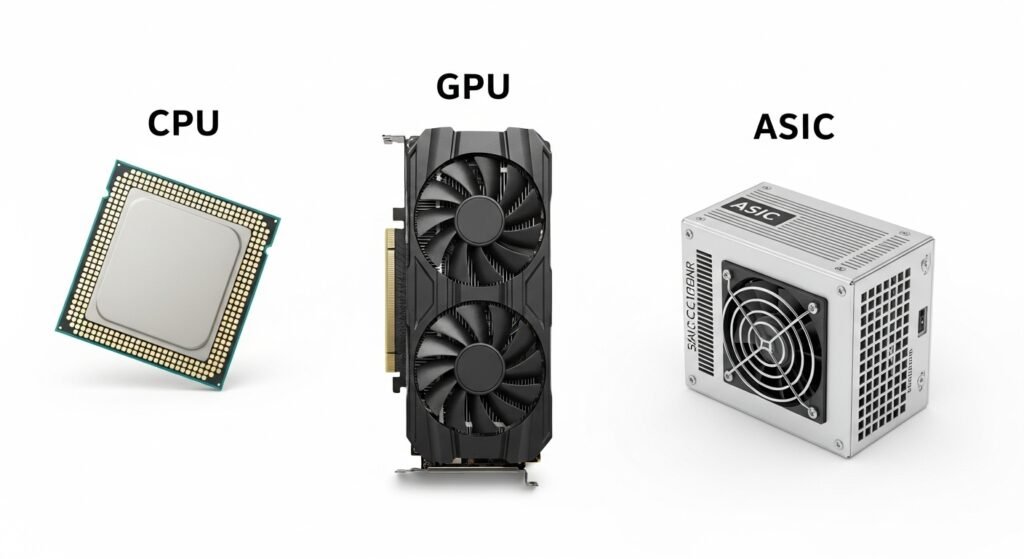
CPU Mining
- What it is: Using a computer’s central processing unit (CPU).
- Pros: Easy to start with existing hardware.
- Cons: Slow and rarely profitable for most coins.
GPU Mining
- What it is: Using graphics processing units (GPUs).
- Pros: Faster than CPUs, good for altcoins like Monero.
- Cons: Less efficient than ASICs for some coins.
ASIC Mining
- What it is: Using specialized devices called application-specific integrated circuits (ASICs).
- Pros: Most efficient for coins like Bitcoin.
- Cons: Expensive and limited to specific cryptocurrencies.
What Equipment Do You Need?
To mine crypto, you need hardware, software, and a wallet.
Mining Hardware
- CPUs: Basic but not profitable for most coins. Example: Intel Core i5.
- GPUs: Good for altcoins. Example: NVIDIA RTX 4090 ($1,700, 250 MH/s).
- ASICs: Best for Bitcoin. Examples:
- Bitmain Antminer S19 XP ($4,600, 141 TH/s)
- Bitmain Antminer S21 ($7,000, 200 TH/s)
Learn more about costs in Is Crypto Mining Profitable?.
Mining Software
- CGMiner: Open-source, supports ASICs.
- BFGMiner: Works with GPUs and ASICs.
- EasyMiner: Beginner-friendly interface.
Wallets
- Hardware Wallets: Secure, offline storage. Examples: Ledger Nano X, Trezor Model T.
- Software Wallets: Convenient but less secure. Examples: Exodus, Electrum.
For wallet options, see Crypto Wallets Explained.
Choosing the Right Cryptocurrency to Mine
Not all coins are worth mining. Consider these factors:
- Mining Difficulty: Harder coins like Bitcoin need powerful hardware.
- Reward Size: Check the block reward for each coin.
- Market Price: Higher coin prices can make mining more profitable.
Popular Coins in 2025:
- Bitcoin (BTC): High rewards but very competitive.
- Litecoin (LTC): Easier to mine than Bitcoin.
- Monero (XMR): CPU-friendly, privacy-focused.
- Kadena (KDA): Profitable with ASICs.
Is Mining Profitable?
Mining profitability depends on several factors:
- Electricity Costs: Mining uses a lot of power. Check your local rates.
- Hardware Costs: ASICs and GPUs can cost thousands.
- Coin Prices: Volatile prices affect earnings.
How to Calculate Profitability:
Use tools like the NiceHash Profitability Calculator. For example, four RTX 4090 GPUs might earn $3.89/day, taking 5.6 years to recoup an $8,000 investment (data from October 2024).
Trends in 2025:
- Bitcoin’s price exceeds $100,000, boosting interest.
- High mining difficulty favors large operations with cheap electricity.
- Small-scale miners may earn $10-$100 monthly.
Legal and Regulatory Considerations
Mining is legal in most countries, but rules differ:
- United States: Allowed, but some states have restrictions.
- China: Banned since 2021.
- Europe: MiCA regulations (2025) provide clear guidelines.
Environmental Impact:
Mining consumes significant energy, raising sustainability concerns. Some miners use renewable energy to reduce their footprint.
Security Tips for Miners
- Protect Your Rig: Store hardware in a secure, cool location to prevent damage.
- Secure Your Wallet: Use hardware wallets for offline storage.
- Use Strong Passwords: Protect mining software and wallets with unique passwords.
Getting Started with Mining
Follow these steps to start mining:
- Choose a Method: Decide on solo, pool, or cloud mining.
- Select Hardware: Buy GPUs or ASICs based on your budget.
- Install Software: Set up mining software like CGMiner.
- Join a Pool: Sign up with F2Pool or SlushPool.
- Set Up a Wallet: Use Ledger or Trezor for security.
- Start Mining: Connect to the network and begin.
For more on buying crypto, see How to Buy Crypto Without KYC.
Frequently Asked Questions
- How long does it take to mine 1 Bitcoin?
With four RTX 4090 GPUs, it could take about 42 years (October 2024 data). ASICs are faster but still time-consuming. - Is mining legal in my country?
Check local regulations. Most countries allow mining, but some, like China, ban it. - Is cloud mining a good option?
It’s convenient but risky due to high fees and potential scams. Research providers thoroughly. - How do I store mined crypto?
Use a secure wallet like Ledger Nano X or Trezor. - What are the risks of mining?
High costs, low profitability, and regulatory changes are key risks.
Conclusion
Crypto mining in 2025 offers opportunities but requires careful planning. Choose the right method, hardware, and coins based on your budget and goals. Use profitability calculators and stay informed about regulations. With research and caution, mining can be a rewarding way to earn crypto.
Related links:

