


Cryptocurrency has become one of the most talked-about investment options in recent years. Many teenagers want to start investing in digital assets like Bitcoin and Ethereum. But if you’re under 18, you face some challenges.

Most major crypto exchanges require you to be at least 18 years old. This guide will show you legal and safe ways to buy crypto as a minor.
Is It Legal to Buy Crypto Under 18?
The short answer: it depends on where you live and how you do it.
There are no federal laws in the United States that stop minors from owning cryptocurrency. The issue comes from exchange policies, not the law itself. Here’s what you need to know:
- No specific laws prohibit minors from owning crypto
- Major exchanges (Coinbase, Binance, Kraken) require users to be 18+
- These age limits come from Know Your Customer (KYC) regulations
- KYC laws help prevent fraud and money laundering
- Minors cannot legally sign contracts in most jurisdictions
The key point: You can own crypto under 18, but buying it through traditional exchanges is restricted.
Why Do Crypto Exchanges Have Age Restrictions?
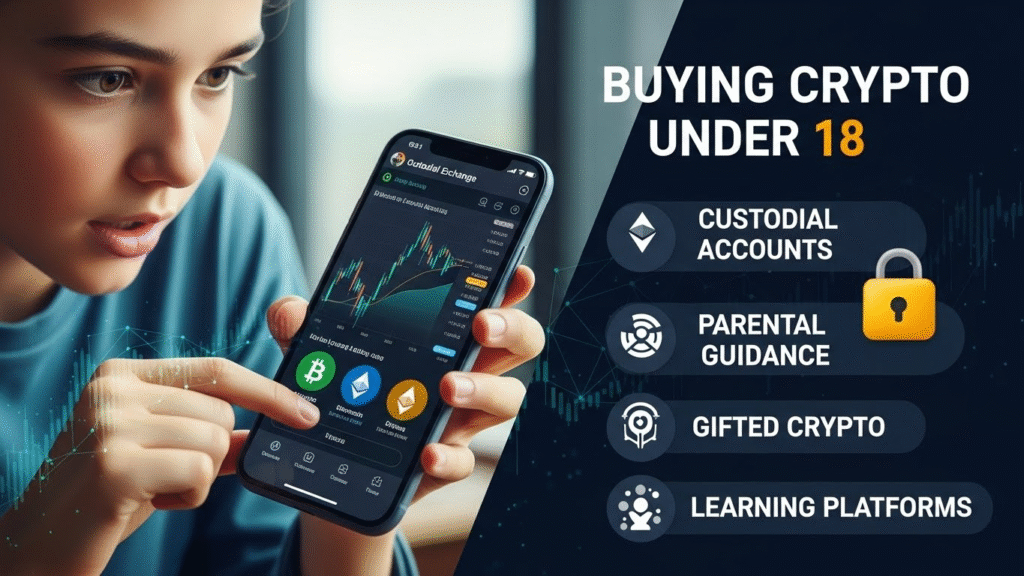
Crypto platforms enforce age limits for several important reasons:
Legal Contract Requirements
In most countries, people under 18 cannot enter legally binding contracts. Opening an exchange account creates a contract between you and the platform. Without the legal capacity to agree to terms, exchanges cannot accept minors.
KYC and AML Compliance
Financial institutions must follow Anti-Money Laundering (AML) and Know Your Customer (KYC) laws. These regulations require identity verification to prevent:
- Money laundering
- Terrorist financing
- Identity theft
- Fraud
Consumer Protection
Cryptocurrencies are highly unpredictable. Prices can change dramatically in hours or even minutes. Regulators want to protect young investors who may not understand these risks fully.
Irreversible Transactions
Crypto transfers cannot be reversed. If you make a mistake or get scammed, you cannot get your money back. This permanence makes it especially risky for inexperienced investors.
Tax Implications for Minors Trading Crypto
Before you start investing, understand the tax rules:
The Kiddie Tax
If you’re under 19 (or 24 if you’re a full-time student), special tax rules apply. The IRS calls this the “kiddie tax.”
How it works:
- Your first $1,300 of unearned income is tax-free
- The next $1,300 is taxed at your rate
- Any amount over $2,600 is taxed at your parents’ rate
Parent Responsibility
Your crypto gains count as unearned income. If your parents don’t know about your crypto activities, they could file incorrect tax returns. This creates legal problems.
Important: The IRS Form 1040 includes a question about cryptocurrency. Your parents must answer this honestly. Keep them informed about your crypto investments.
Capital Gains Tax
When you sell crypto for more than you paid, you owe capital gains tax. Keep records of:
- Purchase dates and prices
- Sale dates and prices
- Transaction fees
- Wallet addresses used
Safe Methods to Buy Crypto Under 18
Here are the legitimate ways minors can get started with cryptocurrency:
1. Parent or Guardian Assistance (Safest Method)
This is the most recommended approach for anyone under 18.
How it works:
- Your parent opens an account on a reputable exchange
- They complete the KYC verification process
- They purchase crypto using their bank account
- The crypto is transferred to a secure wallet
Benefits:
- Completely legal and safe
- You learn under adult supervision
- Proper tax reporting
- Access to trusted exchanges
How to approach your parents:
- Educate yourself about crypto first
- Explain why you’re interested
- Show you understand the risks
- Start with a small amount ($20-$100)
- Agree on clear rules and limits
[Suggested internal link placement: Link to your article about “Best Crypto Wallets for Beginners” or “Understanding Bitcoin Basics”]
2. Custodial Accounts
A custodial account is a legal investment account managed by an adult for a minor.
Types of custodial accounts:
- UGMA (Uniform Gifts to Minors Act)
- UTMA (Uniform Transfers to Minors Act)
How it works:
- Parents set up the account in your name
- They maintain control until you turn 18
- You can watch and learn during this time
- You gain full control when you reach adulthood
Note: Not all crypto platforms offer custodial accounts. Your parents will likely need to use their own exchange account and manage the crypto separately for you.
3. Bitcoin ATMs
Bitcoin ATMs let you buy crypto with cash. There are over 14,000 Bitcoin ATMs worldwide.
Pros:
- No ID required at many locations
- Quick transactions
- Cash purchases provide privacy
- Easy to use
Cons:
- High fees (typically 5-15% above market rate)
- Transaction limits
- Some still require ID verification
- Not available everywhere
Safety tips:
- Use ATMs in well-lit public places
- Bring a parent or trusted adult
- Start with small amounts
- Have your wallet address ready beforehand
4. Peer-to-Peer (P2P) Platforms
P2P platforms connect buyers and sellers directly. Some popular options include:
- LocalCryptos
- Paxful
- LocalBitcoins
How P2P works:
- Find a seller who accepts your payment method
- Negotiate price and terms
- Use the platform’s escrow service
- Complete the trade
Risks to watch for:
- Scammers and fraudsters
- Unfair pricing
- Payment disputes
- Account locks
Safety tips:
- Check seller ratings and reviews
- Use platforms with escrow services
- Start with tiny amounts
- Never share personal information
- Avoid deals that seem too good to be true
5. Earn Crypto Through Work
You can earn cryptocurrency without buying it. This method is completely legal for minors.
Ways to earn crypto:
- Freelance work paid in crypto
- Participate in crypto bounty programs
- Join airdrops (free token distributions)
- Play-to-earn games
- Content creation rewards
- Complete micro-tasks
Platforms that pay in crypto:
- Some freelance websites
- Blockchain project communities
- Crypto reward programs
Benefits:
- No age restrictions
- Builds real skills
- Teaches you about crypto firsthand
- Can be stored until you’re 18
6. Crypto Gift Cards
Some retailers sell crypto gift cards or prepaid cards that can be converted to cryptocurrency.
How it works:
- Purchase a crypto gift card (cash or debit)
- Redeem on compatible platforms
- Receive crypto in your wallet
Limitations:
- Limited availability
- Higher fees than direct purchases
- Smaller amounts only
7. Receive Crypto as a Gift
Family members over 18 can gift you cryptocurrency. This is legal and straightforward.
What you need:
- A crypto wallet address
- A family member willing to send crypto
- Understanding of how to secure your wallet
Tax note: Gifts under $18,000 per year (2024 limit) are not taxable for the recipient.
Exchanges That Don’t Require KYC (Use With Caution)
Some exchanges allow trading without full identity verification. These include:
- Bybit
- KuCoin
- MEXC
Important warnings:
- These platforms may still have age restrictions in their terms
- Violating terms of service can result in account closure
- Higher risk of scams on unregulated platforms
- Less legal protection if something goes wrong
- Your country may have specific laws against this
We do not recommend using these methods without parental knowledge and consent.
Setting Up Your First Crypto Wallet
Before buying crypto, you need a place to store it. A crypto wallet holds your digital assets.
Types of Wallets
Hot Wallets (Online):
- Connected to the internet
- Easy to access and use
- More vulnerable to hacks
- Good for small amounts
Cold Wallets (Offline):
- Not connected to the internet
- Highest security
- Less convenient for frequent transactions
- Best for long-term storage
Wallet Options for Minors
Most wallet apps don’t require age verification. Popular beginner-friendly options include:
- Trust Wallet
- MetaMask
- Exodus
- Guarda Wallet
Security essentials:
- Write down your recovery phrase on paper
- Never share your private keys
- Use a strong password
- Enable two-factor authentication (2FA)
- Store recovery information safely offline
[Suggested internal link placement: Link to your article about “Crypto Security Best Practices” or “How to Choose a Crypto Wallet”]
How Much Should You Invest?
As a teenager, you probably don’t have a large amount to invest. That’s actually good for learning.
Start small:
- Begin with $20-$100 maximum
- Only invest money you can afford to lose completely
- Never use money needed for school or essentials
- Think of your first investment as “tuition” for learning
Dollar-Cost Averaging (DCA):
Instead of investing everything at once, spread purchases over time. This reduces risk from price swings.
Example: Instead of buying $100 of Bitcoin today, buy $10 every week for 10 weeks.
Understanding the Risks
Cryptocurrency investing carries serious risks. You must understand these before starting:
Market Volatility
Crypto prices change dramatically. Bitcoin has lost 50% of its value in single days during market crashes. What you invest today could be worth half tomorrow.
Scams Are Common
The crypto space has many scams targeting inexperienced investors:
Types of scams:
- Fake exchanges and wallets
- Pump and dump schemes
- Phishing emails and websites
- Social media impersonators
- Ponzi schemes
- Fake ICOs (Initial Coin Offerings)
Red flags:
- Guaranteed returns
- Pressure to invest quickly
- Requests for private keys or passwords
- Too-good-to-be-true opportunities
- Anonymous sellers with no reputation
No Insurance Protection
Unlike bank accounts (FDIC insured up to $250,000), crypto has no government protection. If you lose your crypto to hacks or scams, no one will reimburse you.
Psychological Risks
Making quick money can be addictive. The excitement releases dopamine in your brain, similar to gambling. Teen brains are still developing and may be more vulnerable to this.
Warning signs of unhealthy behavior:
- Checking prices constantly
- Losing sleep over crypto
- Hiding investments from parents
- Taking money from other important areas
- Feeling anxious when not trading
Legal and Tax Risks
Trading without understanding tax obligations can create problems. Underage trading on platforms that prohibit minors can result in:
- Account closures
- Loss of funds
- Legal complications for parents
Best Practices for Young Crypto Investors
Follow these guidelines to invest responsibly:
1. Educate Yourself First
Before investing a single dollar:
- Read about blockchain technology
- Understand what you’re buying
- Learn about different cryptocurrencies
- Study market cycles and history
- Follow reputable crypto news sources
Avoid: Social media hype, get-rich-quick schemes, and anonymous investment advice.
[Suggested external link placement: Link to Forbes article about cryptocurrency basics or beginner investing guides]
2. Talk to Your Parents
This is non-negotiable. Your parents need to know about your crypto activities for several reasons:
- Tax reporting requirements
- Legal protection
- Financial guidance
- Emergency help if needed
- Teaching opportunity for everyone
3. Start With Small Amounts
Your first crypto purchase should be educational, not financial. Buy enough to:
- Understand how transactions work
- Learn about wallet security
- Experience price changes
- Make mistakes without major consequences
4. Focus on Major Cryptocurrencies
Stick to established coins when starting:
- Bitcoin (BTC)
- Ethereum (ETH)
- Maybe a few other top-10 coins
Avoid: New coins, meme coins, and anything promising unrealistic returns.
5. Never Invest More Than You Can Lose
Crypto should represent a tiny portion of any teen’s finances. Never invest money meant for:
- College savings
- Emergency funds
- School supplies
- Transportation
- Basic necessities
6. Learn About Security
Protect your investments:
- Use hardware wallets for significant amounts
- Enable all security features
- Never share private keys
- Be suspicious of unsolicited messages
- Verify website URLs carefully
- Use unique passwords
7. Track Everything
Keep detailed records:
- Purchase dates and amounts
- Transaction fees
- Wallet addresses
- Exchanges used
- Current holdings
This helps with taxes and gives you valuable data about your investment decisions.
8. Plan for the Long Term
Cryptocurrency is volatile short-term but has shown growth over years. Consider:
- Holding for at least 1-2 years
- Not panicking during price drops
- Not selling because of FOMO (fear of missing out)
- Learning from market cycles
Educational Resources
Continue learning about cryptocurrency:
Topics to study:
- Blockchain technology fundamentals
- Different types of cryptocurrencies
- How exchanges work
- Market analysis basics
- Crypto security
- DeFi (Decentralized Finance)
- NFTs and their uses
Where to learn:
- Khan Academy (free crypto courses)
- YouTube educational channels (check credentials)
- Crypto news websites
- Books about blockchain and Bitcoin
- Community forums (with adult supervision)
Common Questions About Buying Crypto Under 18
Can I use my parent’s account?
Using a parent’s account with their permission is legal, but may violate exchange terms of service. The account could be frozen if discovered. Better option: have parents buy crypto and transfer it to your wallet.
What happens if I lie about my age?
Lying on a KYC form is fraud. Consequences include:
- Permanent account ban
- Loss of funds in the account
- Possible legal issues
- Difficulty opening accounts in the future
Can I cash out crypto before turning 18?
Cashing out is harder than buying. Most exchanges require KYC to convert crypto to cash. Options include:
- Waiting until you’re 18
- Having parents cash out for you
- Using Bitcoin ATMs (with high fees)
- P2P platforms (with risks)
What’s the best age to start investing?
There’s no perfect age. What matters more is:
- Financial education level
- Understanding of risks
- Parental support
- Emotional maturity
- Having money you can afford to lose
Many experts suggest waiting until 18 when you have full legal rights and access to proper platforms.
Are there crypto platforms specifically for teens?
Currently, very few platforms cater specifically to minors. Some services like Cash App offer “Sponsor Accounts” with parental supervision, but cryptocurrency options are limited.
The Role of Parents in Teen Crypto Investing
Parents play a crucial part in their child’s crypto education and safety.
What Parents Should Do
Educate yourselves: Learn about crypto alongside your teen. You don’t need to be experts, but understand the basics.
Set clear boundaries:
- Investment limits
- Approved platforms only
- Regular check-ins
- Require transparency
Teach financial responsibility:
- Risk management
- Research before investing
- Long-term thinking
- Learning from mistakes
Monitor activity:
- Review transactions periodically
- Watch for warning signs of addiction
- Ensure homework and responsibilities come first
Be involved:
- Open exchange accounts in your name
- Hold private keys if needed
- Help with security setup
- Assist with tax reporting
What Parents Should Avoid
- Completely dismissing your teen’s interest
- Letting teens invest secretly
- Ignoring tax implications
- Failing to educate about scams
- Allowing access to unregulated platforms
When to Wait Until You’re 18
Sometimes the best decision is to wait. Consider waiting if:
- You don’t have parental support
- You can’t afford to lose the money
- You don’t understand the basics yet
- You’re feeling pressured by friends or social media
- You don’t have a secure way to store crypto
- Local laws are unclear
Use this time to:
- Save money for future investments
- Study cryptocurrency thoroughly
- Follow market trends
- Learn from others’ experiences
- Build financial literacy skills
Final Thoughts
Buying cryptocurrency under 18 is possible, but it requires careful planning and adult involvement. The safest approach is working with your parents to make informed decisions together.
Remember these key points:
- Legality: Owning crypto is legal for minors, but buying through major exchanges requires being 18+
- Safety first: Always prioritize security and never invest more than you can lose
- Parent involvement: Keep your parents informed for legal, tax, and safety reasons
- Education matters: Learn before you invest, and keep learning as you go
- Start small: Your first investments should be about education, not profit
- Be patient: Crypto is a long-term game, not a get-rich-quick scheme
- Stay safe: Scams are everywhere; verify everything
The crypto world will still be here when you turn 18. There’s no rush to invest right now. Focus on building knowledge and financial literacy. When you do start investing, you’ll be better prepared to make smart decisions.
If you decide to proceed, do it legally, safely, and with full transparency. The habits you build now will serve you for life.
[*Suggested internal link placements throughout:

