

Cryptocurrency is a hot topic, but many young people wonder, “How old do you have to be to buy crypto?” This guide explains the age requirements for purchasing cryptocurrency, options for minors, and legal rules across countries. We’ll also cover risks and safe ways to get started, ensuring you’re informed and ready to invest wisely.
Why Age Matters for Buying Crypto
Most cryptocurrency exchanges require users to be at least 18 due to Know Your Customer (KYC) rules. These regulations fight fraud and money laundering by verifying identities with IDs like passports or driver’s licenses, which minors often lack. While owning crypto has no age limit, buying it through regulated platforms does. Rules vary by country, so let’s break it down.
Age Requirements by Country
Age limits for buying crypto depend on where you live. Here’s a quick look at key regions:
| Country | Age Requirement | Notes |
|---|---|---|
| United States | 18 | Minors can hold crypto via custodial accounts managed by parents. |
| Canada | 18 | Parents can open accounts for minors. |
| South Korea | 19 | Stricter rules recently raised the age limit. |
| Japan | 20 | Aligns with legal age for financial contracts. |
| Germany | 16 | Teens can buy with parental consent. |
Always check local laws, as regulations evolve. For example, South Korea tightened rules in 2024, raising the age to 19. In the U.S., platforms like Coinbase enforce an 18+ rule due to KYC.
Can Minors Buy Crypto?
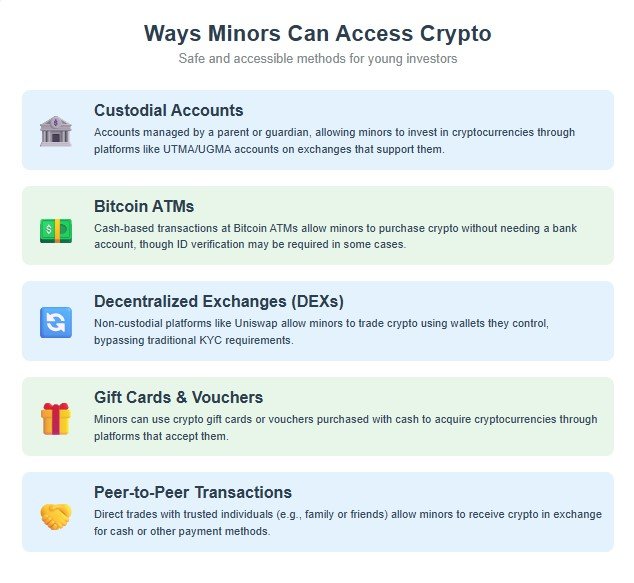
Minors can’t open accounts on most exchanges, but they can still get involved with parental help. Here are legal and safe options for those under 18:
1. Custodial Accounts
Parents can set up custodial accounts on platforms like EarlyBird or Greenlight. These let adults manage crypto for kids until they’re 18. The assets legally belong to the child but are controlled by the parent.
2. Crypto Wallets
Minors can create non-custodial wallets like Guarda or MetaMask, which don’t require KYC. However, buying crypto to store in these wallets often needs parental assistance due to payment restrictions.
3. Bitcoin ATMs
Over 14,000 Bitcoin ATMs worldwide let users buy crypto with cash, often without ID. They’re convenient but charge high fees (5-10% above exchange rates). Check locations at CoinATMRadar.
4. Decentralized Exchanges (DEXs)
DEXs like Uniswap or PancakeSwap don’t require KYC, making them accessible to minors. You’ll need crypto to start trading, which may require a parent’s help to obtain. DEXs are complex and risky, so proceed with caution.
5. Peer-to-Peer (P2P) Trading
Platforms like LocalBitcoins connect buyers and sellers directly. Some sellers accept cash or gift cards, bypassing KYC. However, scams are a risk, so only use trusted platforms.
6. Earning Crypto
Teens can earn crypto by freelancing in IT, coding, or content creation. Platforms like Cryptomus P2P reward small tasks with crypto, offering a safe way to start without buying.
7. Parental Guidance
The safest option is having parents buy crypto on a secure exchange like Binance and store it in a cold wallet (e.g., Ledger Nano S). When the minor turns 18, the assets can be transferred.
Risks of Crypto for Young Investors
Crypto is exciting but risky, especially for beginners. Here’s what to watch out for:
- Volatility: Prices can crash or soar quickly. Bitcoin fell from $68,000 in 2021 to $20,000 in 2022, then hit $110,000 in 2025. Only invest what you can afford to lose.
- Scams: Fake exchanges and phishing are common. Stick to reputable platforms like Coinbase or Binance Is Crypto.com Safe?.
- Security: Wallets and exchanges can be hacked. Use two-factor authentication and cold wallets for safety.
- Regulation: Rules change fast. Minors using non-KYC platforms risk account closure or legal issues.
Start with small investments ($100–$500) in major coins like Bitcoin or Ethereum. Learn the basics first—check out What is a Crypto ETF? for safer investment options.
Legal Considerations for Teens and Parents
There’s no universal law banning minors from owning crypto, but buying it is restricted due to KYC and contract laws. Minors lack “contractual capacity” to sign agreements with exchanges. Parents can bridge this gap by:
- Opening custodial accounts.
- Buying crypto and gifting it via a wallet.
- Teaching kids about risks and security.
In some countries, like Germany, teens as young as 16 can buy crypto with parental consent. Always research local laws to stay compliant.
FAQs
From Google’s “People Also Ask” and “Related Searches,” here are key questions teens and parents ask:
- Can a 16-year-old buy crypto? Yes, with parental consent or through non-KYC platforms like Bitcoin ATMs or DEXs.
- Is it legal for minors to own crypto? Yes, owning crypto has no age limit, but buying it often requires an adult.
- What’s the safest way for teens to invest? Use custodial accounts or have parents manage purchases on secure exchanges.
- How risky is crypto for kids? Very risky due to volatility and scams. Education and small investments are key.
For more on safe platforms, see Top Crypto-Friendly Banks.
Conclusion
You need to be 18 to buy crypto on most exchanges due to KYC rules, but minors can still participate through custodial accounts, Bitcoin ATMs, DEXs, P2P trading, or earning crypto. Parents play a big role in keeping things safe and legal. Crypto is volatile, so start small, learn the ropes, and stick to trusted platforms. For more tips, read How to Start Investing in Cryptocurrency.
Visit more:

