


Cryptocurrency is a hot topic, but for international students on an F1 visa, investing in it raises questions. Can you legally invest? What are the tax rules? This guide answers these questions, ensuring you stay compliant with U.S. regulations while exploring crypto.
Understanding F1 Visa Restrictions
Before investing in cryptocurrency, you need to know the F1 visa rules.
What is an F1 Visa?
An F1 visa allows international students to study full-time at U.S. schools, from high school to graduate programs. Its main purpose is education. You can stay in the U.S. during your program plus a 60-day grace period after graduation. Work is limited to protect your student status.
Employment and Income Rules
F1 visa rules restrict how you earn money:
- On-campus work: Up to 20 hours per week during school, full-time during breaks.
- Off-campus work: Requires approval, like Optional Practical Training (OPT) or Curricular Practical Training (CPT).
- Passive income: Allowed, including gains from investments like stocks or crypto.
Active income, like running a business, is not allowed without authorization.
Is Crypto Investing Passive Income?
Buying and holding cryptocurrency is considered passive income, which is allowed for F1 students. Frequent trading, like day trading, may be seen as active income, risking your visa status. Stick to long-term investing and check with your Designated School Official (DSO).

Is Investing in Crypto Legal for F1 Students?
U.S. Laws and Crypto
No specific laws stop F1 students from investing in cryptocurrency. You must follow:
- Anti-Money Laundering (AML): Ensures transactions are legal.
- Know Your Customer (KYC): Requires identity verification on platforms like Coinbase.
Use reputable exchanges to avoid legal issues.
Risks to Visa Status
Passive crypto investments don’t affect your F1 status. However, frequent trading could be seen as unauthorized work. To stay safe:
- Avoid day trading or business-like activities.
- Focus on long-term investments.
- Consult your DSO before starting.
Tax Rules for F1 Students
Crypto gains are taxable, and F1 students have specific obligations.
Reporting Crypto Gains
As a nonresident alien, you file taxes on Form 1040NR. Crypto gains are taxed at 30%, but tax treaties with your home country may lower this rate. Report all transactions, including sales or exchanges. Not reporting can lead to penalties or visa issues.
Tax Filing Tips
- Keep records of all crypto transactions (dates, amounts, prices).
- Answer the IRS digital asset question on your tax return.
- Use tax software like Sprintax or consult a tax professional.
Learn more about crypto taxes at Do You Pay Taxes on Crypto Before Withdrawal?.
| Tax Detail | Information |
|---|---|
| Tax Form | Form 1040NR |
| Tax Rate | 30% (may vary with treaty) |
| Reporting | Report all gains/losses |
| Penalties | Fines, visa issues for non-compliance |
How to Invest in Crypto Safely
Here’s how F1 students can start investing in cryptocurrency.
Choosing a Platform
Pick a trusted exchange that supports KYC and tax reporting:
- Coinbase: Easy to use, offers tax tools.
- Gemini: Secure, U.S.-regulated.
- Kraken: Wide crypto selection.
You may need a Social Security Number (SSN) or Individual Taxpayer Identification Number (ITIN). Apply for an ITIN if you don’t have an SSN.
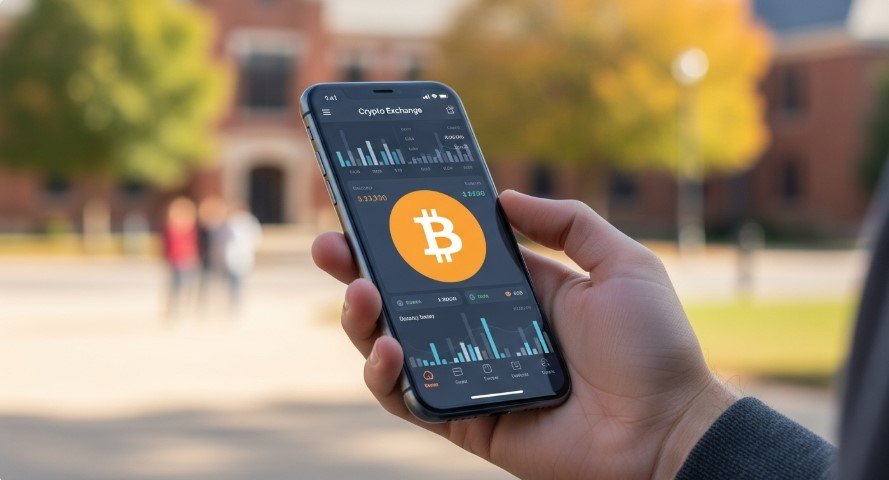
Steps to Start
- Sign Up: Create an account on a platform like Coinbase.
- Verify Identity: Submit your passport or other ID for KYC.
- Fund Account: Link a bank account or card to buy crypto.
- Invest Wisely: Research coins like Bitcoin or Ethereum and start small.
For more tips, read How to Buy Crypto with Tangem Wallet.
Risks of Crypto Investing
Market Volatility
Crypto prices can swing wildly. For example, Bitcoin’s value has dropped or risen by thousands in days. To reduce risks:
- Invest only what you can afford to lose.
- Research market trends.
- Avoid frequent trading.
Understand market dynamics at Crypto Market Cap Explained.
Protecting Your Visa
Frequent trading or crypto mining may be seen as active income, violating F1 rules. Mining, for instance, is considered self-employment and is not allowed. Stick to passive strategies and consult your DSO.
Frequently Asked Questions
Can F1 Students Invest in Stocks?
Yes, F1 students can invest in stocks as a passive activity, similar to crypto. Avoid day trading to stay compliant.
Is Day Trading Crypto Allowed?
Day trading may be seen as active income, risking your visa. Limit trades to a few per month. See Can You Day Trade Crypto?.
Do I Need an SSN for Crypto?
Some platforms require an SSN or ITIN for tax reporting. Apply for an ITIN if needed.
What Are Tax Rates for Crypto Gains?
F1 students pay 30% on capital gains, unless a tax treaty applies. Consult a tax professional.
Which Platforms Are Best for F1 Students?
Coinbase, Gemini, and Kraken are safe choices. They comply with U.S. laws and offer tax tools.
Conclusion
F1 students can invest in cryptocurrency if it’s passive and complies with U.S. tax and visa rules. Report gains on Form 1040NR, use trusted platforms, and avoid frequent trading. Crypto is volatile, so invest cautiously and consult your DSO or a tax expert. With the right approach, you can explore crypto while staying compliant.

