
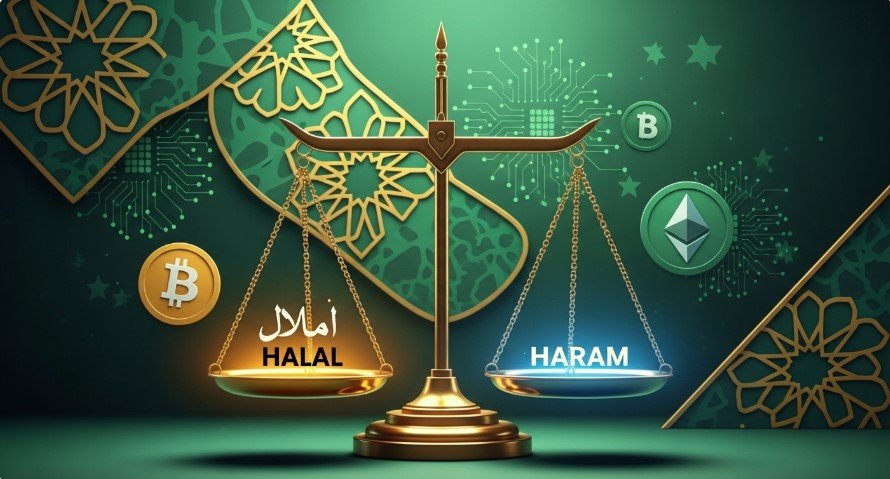

Cryptocurrency has transformed the financial world, offering a decentralized, digital alternative to traditional currencies. For Muslims, a key question is whether cryptocurrency is halal (permissible) or haram (forbidden) under Islamic law. This guide explores the debate, incorporating insights from 2025, to help Muslims make informed decisions. It covers Islamic finance principles, scholarly opinions, practical considerations, and the future of cryptocurrency in Islamic finance.
Understanding Halal and Haram in Finance
In Islamic finance, halal refers to what is permissible, while haram refers to what is forbidden. Financial transactions must adhere to core principles derived from the Quran and Sunnah:
- Riba (Interest): Charging or paying interest is strictly prohibited, as it is considered exploitative.
- Gharar (Uncertainty): Transactions with excessive uncertainty or risk are not allowed to ensure fairness.
- Maisir (Gambling): Any form of gambling or speculative behavior is forbidden, as it promotes chance over effort.
- Ethical Investments: Investments must avoid haram industries (e.g., alcohol, gambling) and contribute to societal good.
These principles guide the evaluation of cryptocurrency’s permissibility in Islam.
What is Cryptocurrency?
Cryptocurrency is a digital or virtual currency secured by cryptography. It operates on blockchain technology, a decentralized ledger that records transactions across a network of computers. Unlike traditional currencies, cryptocurrencies are not issued or regulated by central authorities like governments or banks. Examples include Bitcoin, Ethereum, and Islamic Coin (ISLM).
Key features of cryptocurrency include:
- Decentralization: No single entity controls the network.
- Transparency: Blockchain records are public and immutable.
- Global Accessibility: Transactions can occur worldwide without intermediaries.
These characteristics raise both opportunities and challenges for Islamic compliance.

The Debate: Is Crypto Haram or Halal?
The permissibility of cryptocurrency in Islam is a contentious issue, with scholars divided based on its alignment with Sharia principles. Below are the main arguments for and against its permissibility.
Arguments for Haram
Some scholars argue that cryptocurrencies are haram due to several concerns:
- Speculation and Gambling: Cryptocurrencies are highly volatile, and trading them can resemble gambling (maisir), which is forbidden. For example, Bitcoin’s value fluctuated from £50,000 in November 2021 to £15,500 in June 2022.
- Lack of Intrinsic Value: Cryptocurrencies lack physical backing (e.g., gold or silver), and their value depends on market demand, which some scholars argue makes them invalid as currency.
- Unregulated Nature: The decentralized and anonymous nature of cryptocurrencies can facilitate illegal activities, such as money laundering or funding terrorism. In 2018, $872 million in Bitcoin was exchanged on the dark web.
- No Central Authority: Unlike fiat currencies, cryptocurrencies are not backed by governments or central banks, which some scholars believe makes them non-compliant with Islamic finance principles.
Arguments for Halal
Other scholars argue that cryptocurrencies can be halal under certain conditions:
- No Riba: Cryptocurrency transactions do not involve interest, aligning with the prohibition of riba.
- Medium of Exchange: Cryptocurrencies like Bitcoin are accepted by businesses like Amazon and Microsoft, functioning as a medium of exchange.
- Blockchain Transparency: Blockchain’s transparent and secure nature aligns with Islamic principles of fairness and trust.
- Ownership of Assets: Cryptocurrencies can be considered digital assets (Mal), which are permissible if not used for haram purposes.
Table: Key Arguments for and Against Cryptocurrency’s Permissibility
| Aspect | Haram Argument | Halal Argument |
|---|---|---|
| Speculation | High volatility resembles gambling (maisir). | Speculation is not inherently haram if the intent is ethical investment. |
| Value | No intrinsic value; not backed by physical assets. | Functions as a medium of exchange, accepted by businesses. |
| Regulation | Unregulated, enabling illegal activities like money laundering. | Decentralization promotes transparency via blockchain. |
| Authority | Not issued by legitimate authorities like governments. | No central authority aligns with Islamic finance’s anti-interest stance. |
Learn more about how to buy crypto without KYC for secure and private transactions.
Scholarly Opinions on Cryptocurrency
Islamic scholars have issued various fatwas, reflecting the diversity of opinions:
- Mufti Taqi Usmani: Argues cryptocurrencies are not valid currencies due to lack of government backing and their use in speculation and illegal activities.
- Mufti Shawki Allam: The Grand Mufti of Egypt declared crypto trading haram in 2018, citing its speculative nature and potential for contraband trade.
- Dr. Humayon Dar: Suggests cryptocurrencies can be halal if used as a medium of exchange and not for speculation.
- Mufti Muhammad Abu-Bakar: In 2018, issued a fatwa stating Bitcoin is halal as a digital asset without interest.
- Indonesia’s National Ulema Council: Issued a fatwa in October 2021 prohibiting crypto due to uncertainty and harm.
The lack of consensus underscores the need for Muslims to consult trusted scholars.

Practical Considerations for Muslims
Muslims considering cryptocurrency should evaluate several factors to ensure Sharia compliance:
- Intention and Use: The intention behind using cryptocurrency is critical. Using it for permissible transactions (e.g., buying halal goods) is more likely to be halal than speculative trading.
- Halal Cryptocurrencies: Some cryptocurrencies, like Islamic Coin (ISLM) on the HAQQ blockchain, are designed to be Sharia-compliant and certified by Islamic scholars.
- Spot Trading vs. Derivatives: Spot trading (immediate buying and selling) is generally considered more permissible than derivatives trading (e.g., futures, margin trading), which involves leverage and speculation.
- Zakat and Inheritance: Scholars are still debating whether cryptocurrencies qualify as Mal for zakat (charity) or inheritance, as they are not yet classified as traditional money.
Examples of Crypto in Islamic Contexts
- Shacklewell Lane Mosque: In 2018, this UK mosque became the first to accept Bitcoin donations and zakat, deeming it halal.
- Gold-Backed Cryptocurrencies: Projects like OneGram and HelloGold are certified as halal by Islamic advisors, as they are backed by physical assets Al Jazeera.
Internal Link: Check out top companies accepting cryptocurrency to see how crypto is used in real-world transactions.
The Future of Cryptocurrency in Islamic Finance
As of 2025, the crypto landscape in Islamic finance is evolving:
- Regulatory Progress: About 60% of Muslim-majority countries allow regulated crypto trading under Sharia-compliant frameworks.
- Sharia-Compliant Platforms: Platforms like MEXC offer halal trading options, including Islamic Coin (ISLM).
- Innovations: Projects like SukukChain use blockchain for Sharia-compliant financial instruments, providing ethical investment options.
- Research and Tools: A 2022 research paper proposed a machine learning model to identify Sharia-compliant cryptocurrencies, aiding Muslim investors.
These developments suggest growing acceptance, but challenges like volatility and regulatory gaps remain.
Conclusion
The question of whether cryptocurrency is haram or halal remains unresolved, with valid arguments on both sides. Scholars who deem it haram cite its speculative nature, lack of intrinsic value, and potential for illegal use. Those who consider it halal emphasize its lack of riba, transparency, and potential as a medium of exchange. Muslims should approach cryptocurrency cautiously, consulting knowledgeable scholars and focusing on Sharia-compliant options like spot trading or certified cryptocurrencies. As the crypto landscape evolves in 2025, with more regulated frameworks and halal options, Muslims can engage with digital finance while staying true to their faith.
Curious about crypto’s future? Read Will Crypto Recover? for insights on market trends.

