

Cryptocurrency offers exciting opportunities, but it also attracts scammers looking to exploit unsuspecting investors. One of the most deceptive scams is the honeypot, a trap that lures users with promises of easy profits only to lock their funds. This article explains what a honeypot is in crypto, how these scams work, and how you can protect yourself. Whether you’re new to crypto or an experienced trader, understanding honeypots is key to keeping your investments safe.
Understanding Honeypot Crypto Scams
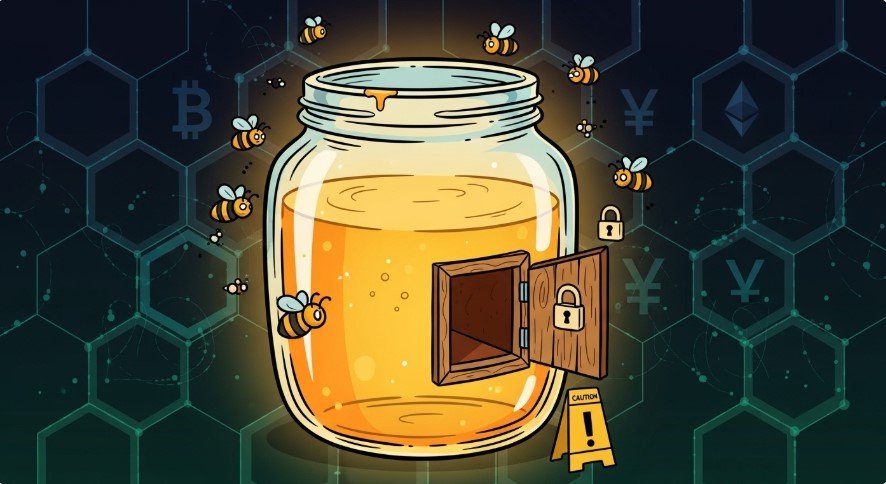
A honeypot in crypto is a scam where attackers create a fake token, wallet, or smart contract that appears legitimate. The term “honeypot” comes from the idea of a sweet trap, like a pot of honey, that draws in victims. These scams are designed to trick investors into sending money, only to find they can’t withdraw or sell their assets. According to the Federal Trade Commission, crypto scams, including honeypots, cost investors over $1 billion annually.
Honeypots often target users on decentralized exchanges (DEXs) like Uniswap or PancakeSwap. They exploit the trust and excitement around new tokens, especially meme coins, to lure victims. Once funds are trapped, scammers either drain them or leave investors with worthless assets.
How Do Honeypot Scams Work?
Honeypot scams follow a clear pattern to deceive investors. Here’s how they typically operate:
- Creating the Trap
Scammers deploy a malicious smart contract that looks like a legitimate token or wallet. The contract might mimic a popular project or promise high returns. Hidden code ensures that only the scammer can withdraw funds. - Attracting Victims
The scam is promoted through social media, forums, or paid ads. Scammers may use fake endorsements or create hype on platforms like X or Telegram. Some even share private keys to a wallet that appears to hold valuable tokens, tricking users into thinking they’ve found easy money. - Locking Funds
Once you invest, the trap is sprung. The smart contract blocks selling or transferring tokens, often using blacklists or high fees. In wallet-based honeypots, “sweeper bots” instantly transfer your funds to the scammer’s address when you try to access the wallet.
Types of Honeypot Scams
Honeypot scams come in various forms, each designed to exploit different vulnerabilities:
- Blacklist Honeypots
These tokens allow you to buy but add your wallet to a blacklist, preventing sales. The contract’s code hides this restriction, making it seem normal until you try to sell. - High Sell Tax Honeypots
These impose extreme fees (up to 100%) when you try to sell, ensuring you can’t profit. The fees go to the scammer, leaving you with nothing. - Liquidity Pull Honeypots
Scammers add liquidity to make the token look legitimate, then remove it after enough investors buy in. This crashes the token’s value, leaving it worthless. - Hardware Wallet Honeypots
Sold on platforms like TikTok, these tampered wallets come with private keys controlled by scammers. In 2024, such scams stole $6.9 million from victims. - Honeypot-as-a-Service (HaaS)
Scammers sell pre-built honeypot contracts to others, making it easier for fraudsters to launch scams. This has increased the prevalence of honeypots in 2025.
How to Spot a Honeypot Crypto Scam
Identifying a honeypot requires careful attention. Here are key warning signs:
- Too-Good-to-Be-True Promises
Offers of massive returns or exclusive deals are red flags. Legitimate projects focus on utility, not hype. - Anonymous Teams
If the project’s developers are anonymous or lack verifiable credentials, be cautious. Check their website and social media for transparency. - No Liquidity Lock
Legitimate tokens lock liquidity to prevent developers from draining funds. Use platforms like Uniswap to verify liquidity locks. - Sudden Popularity
Tokens that gain traction overnight, especially through social media or Telegram, may be scams. Check for organic growth and community engagement. - Failed Test Transactions
Before investing, buy a small amount of the token and try to sell it. If the sale fails or incurs high fees, it’s likely a honeypot.
Common Red Flags of Honeypot Scams
| Red Flag | Description |
|---|---|
| Unrealistic Promises | Claims of 1000% returns or exclusive opportunities. |
| Anonymous Developers | No verifiable team or contact information. |
| No Liquidity Lock | Developers can remove liquidity, crashing the token’s value. |
| Sudden Hype | Heavy promotion on social media or forums with no clear reason. |
| High Sell Fees | Fees of 50% or more when trying to sell the token. |
| Suspicious Wallet Activity | Funds transferred out immediately after deposits, indicating sweeper bots. |
Tools to Detect Honeypot Tokens
Several tools can help you analyze tokens for honeypot risks:
- TokenSniffer.com
Analyzes smart contracts and provides a risk score. It flags potential honeypots and other scam indicators. - Honeypot.is
Simulates buy and sell transactions to check if a token is a honeypot. Simply enter the token’s contract address. - De.Fi Scanner
Offers advanced analysis, including checks for fees and gas usage, to identify risky tokens. - Quick Intel
A browser extension that warns you about potential honeypots when browsing DEXs.
Preventing Honeypot Scams
Protecting yourself from honeypots requires diligence and smart practices:
- Research Thoroughly
Check the project’s whitepaper, team, and community. Legitimate projects have active GitHub repositories and transparent communication. Learn more about safe investing at Krypdrops: How to Start Investing in Cryptocurrency. - Verify Endorsements
Scammers may fake celebrity endorsements. Always confirm claims through official channels. - Never Share Your Seed Phrase
Your seed phrase is the key to your wallet. Sharing it gives scammers full control. Read more about wallet security at Krypdrops: Is Crypto Com Safe?. - Use Hardware Wallets
Store funds in secure wallets like Ledger or Tangem. Avoid keeping large amounts on exchanges. - Enable Two-Factor Authentication (2FA)
Add 2FA to your accounts for extra security. Use apps like Google Authenticator instead of SMS-based 2FA. - Avoid Unsolicited Offers
Ignore direct messages on platforms like X or Discord offering crypto deals. These are often honeypot scams.
Honeypot vs. Other Crypto Scams
Honeypots are often confused with other scams like rug pulls. Here’s how they differ:
- Honeypot
- Traps funds by blocking sales or withdrawals.
- Uses malicious smart contracts to lock assets.
- Example: A token you can buy but can’t sell due to a blacklist.
- Rug Pull
- Developers abandon the project after raising funds.
- Liquidity is removed, making tokens worthless but not necessarily locked.
- Learn more at Krypdrops: Crypto Slippage Explained.
Honeypot vs. Rug Pull
| Feature | Honeypot | Rug Pull |
|---|---|---|
| Mechanism | Blocks selling/withdrawing | Removes liquidity |
| Fund Accessibility | Funds locked by contract | Funds not locked but worthless |
| Common Platforms | DEXs like Uniswap | DEXs or centralized platforms |
| Recovery Chances | Near zero due to blockchain nature | Slim, depends on legal action |
Case Studies of Honeypot Scams
Real-world examples show the devastating impact of honeypots:
- Squid Game Token (2021)
Inspired by the Netflix show, this token promised huge profits. After reaching $2,861, developers pulled liquidity, crashing the value to zero. Investors lost $3.38 million. - TikTok Cold Wallet Scam (2024)
Scammers sold tampered hardware wallets on TikTok with preloaded private keys. Victims lost $6.9 million when funds were drained instantly. - February 2024 Multi-Scam Attack
A single cybercriminal ran nine honeypot scams, stealing $3.2 million using Telegram promotions and paid actors.
These cases highlight the need for caution, especially with trending or heavily promoted projects.
Conclusion
Honeypot scams are a serious threat in the crypto world, exploiting trust and technical vulnerabilities. By understanding how they work, spotting red flags, and using tools like TokenSniffer, you can protect your investments. Always research projects, test transactions, and use secure wallets. If an opportunity seems too good to be true, it probably is. Stay vigilant to keep your funds safe.
Frequently Asked Questions (FAQs)
Q: What is a honeypot in crypto?
A: A honeypot is a scam where scammers create a fake token or wallet to trap funds, preventing investors from selling or withdrawing.
Q: How can I check if a token is a honeypot?
A: Use tools like TokenSniffer or Honeypot.is to analyze the smart contract for risks.
Q: Can I recover funds from a honeypot scam?
A: Recovery is unlikely due to blockchain’s irreversible nature. Report scams to platforms like Chainabuse to warn others.
Q: Are honeypot scams common?
A: Yes, they’re widespread, costing over $1 billion yearly, per FTC estimates. New variants like HaaS make them more common in 2025.
Q: How do honeypots differ from rug pulls?
A: Honeypots lock funds via smart contracts, while rug pulls crash token value by removing liquidity. Both are deceptive but work differently.

